
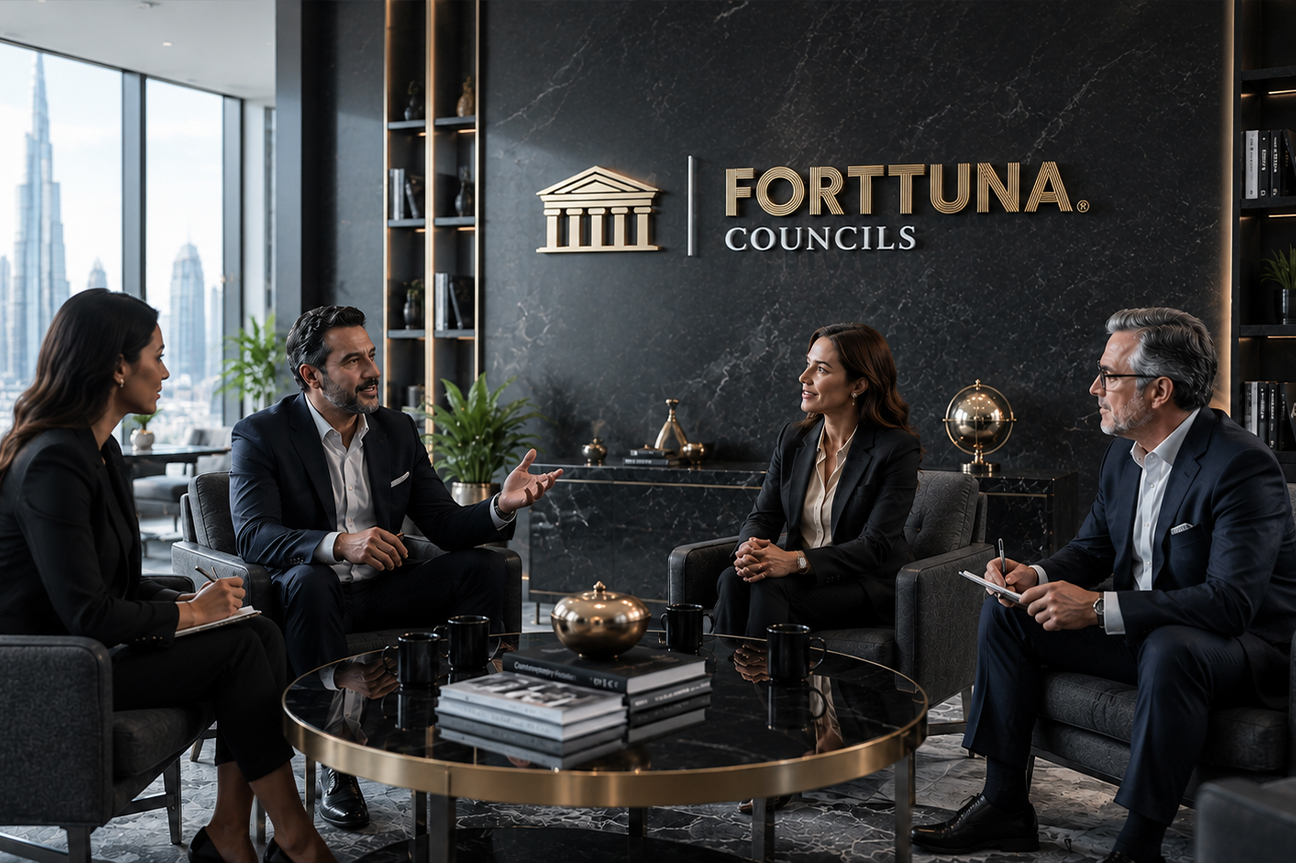
In business, products can be copied. Strategies can be replicated. Even technology rarely stays unique for long. Yet one advantage continues to separate exceptional leaders from everyone else, the quality of the people they surround themselves with.
History offers countless examples of leaders who didn't succeed because they had all the answers. They succeeded because they consistently learned from other accomplished people, challenged their own thinking, and gained access to perspectives they couldn't develop alone.
This is why the most influential CEOs, founders, policymakers, and entrepreneurs rarely build their careers in isolation. Instead, they invest in relationships that expose them to new ideas, different industries, and global opportunities.
Leadership Is Becoming More Complex
A decade ago, business leaders primarily focused on competition within their own industries. Today, every executive faces challenges that extend far beyond their expertise.
Artificial intelligence is reshaping decision-making. Sustainability is influencing investment strategies. Cybersecurity affects every organization regardless of sector. Economic uncertainty can change markets overnight.
No single leader can master every discipline.
The most effective executives recognize that leadership is no longer about knowing everything, it is about knowing where to learn, who to learn from, and how quickly to adapt.
This shift has increased the value of executive communities where experienced professionals openly exchange knowledge and challenge one another's thinking.
Why Relationships Matter More Than Contacts
Many professionals spend years expanding their contact lists but never build meaningful professional relationships.
There is a significant difference between having thousands of LinkedIn connections and having a trusted group of peers who can provide honest advice during critical decisions.
When leaders become part of a genuine executive community, conversations move beyond introductions. They begin discussing market trends, expansion strategies, leadership challenges, talent acquisition, emerging technologies, and opportunities for collaboration.
These discussions often lead to partnerships, board appointments, investment opportunities, and long-term business relationships that would never emerge from traditional networking events.
The Rise of Curated Executive Communities
Around the world, business leaders are moving away from large networking events in favor of curated leadership communities.
These communities focus less on collecting business cards and more on creating environments where members share experiences, solve problems together, and support one another's growth.
Curated communities also encourage cross-industry learning. A healthcare executive may discover innovation strategies from a technology founder, while a manufacturing CEO may gain fresh insights from a sustainability expert or policymaker.
Innovation increasingly happens at the intersection of industries, making diverse professional networks more valuable than ever.
Leadership Is Also About Visibility
Professional success is no longer determined solely by operational performance.
Today's executives are expected to contribute to industry conversations through speaking engagements, published articles, media interviews, podcasts, and collaborative initiatives.
Thought leadership has become an important component of executive credibility because stakeholders want to understand not only what leaders have achieved, but also how they think.
This growing emphasis on visibility has made leadership communities increasingly valuable, providing platforms where expertise can be shared while building meaningful professional relationships.
A Community Built Around Collaboration
This evolving leadership landscape is one reason why platforms such as Forttuna Councils, an initiative of The Forttuna Group, are gaining attention among executives across industries.
Rather than focusing solely on networking, Forttuna Councils brings together founders, C-suite executives, policymakers, innovators, academics, and changemakers to encourage collaboration, knowledge exchange, and long-term professional growth.
By connecting leaders from different sectors and regions, the community reflects a broader trend in modern leadership, one where success is increasingly shaped by collaboration rather than competition.
The Future Belongs to Connected Leaders
Business will continue to evolve. Technologies will change. Markets will shift. New competitors will emerge.
The one constant is that leaders who continue learning from other accomplished professionals will always be better prepared than those who rely only on their own experience.
In an increasingly interconnected world, the strongest competitive advantage may not be the size of a company or the sophistication of its technology. It may simply be the strength of the community behind its leaders.
Follow Forttuna Councils
Stay connected with the latest updates, insights, and leadership stories:
Author: Siddhi Kamath
Review Expert: Dr. Raul Handa, DBA