
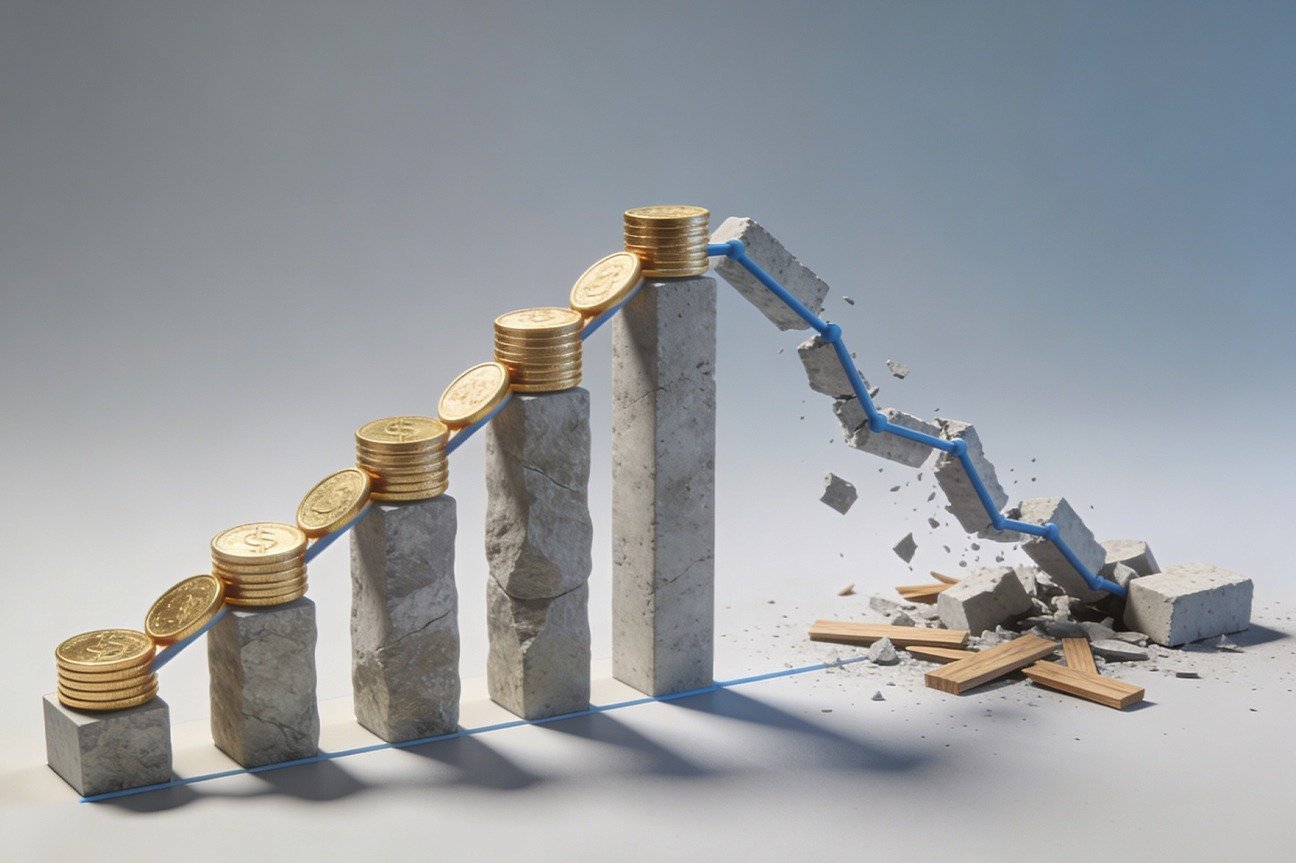
There comes a moment in every leader's journey when the gap between who they believe they are and who they truly are becomes impossible to ignore. Those who face that moment honestly grow stronger, while those who avoid it risk losing credibility.
Over more than three decades in governance, compliance, education, and institutional leadership, I have seen this pattern repeatedly. Lasting leadership is rarely defined by talent alone, but by self-awareness, integrity, and the courage to embrace the truth.
Self-Awareness Or Self-Protection
The earliest indicator of a leader’s trajectory is their ability to receive honest feedback about themselves. This is not performative humility or carefully curated vulnerability. It is the genuine willingness to hear information that challenges their internal narrative.
Leaders who fail often build invisible systems of protection around themselves. Over time, people stop delivering difficult truths because doing so becomes socially or professionally costly. Eventually, the leader operates inside a filtered version of reality where problems arrive late, and decisions are made on incomplete information.
The leaders who endure create the opposite environment. They invite disagreement. They treat dissent as useful data rather than disloyalty. They ask questions without already needing the answer to confirm their existing beliefs. These leaders understand that accurate information is more valuable than temporary comfort.
Self-awareness is not a personality trait. It is a disciplined practice that must be maintained intentionally.
Values Mean Little Until They Cost Something
Every organisation speaks about values. They appear in annual reports, on websites, and across office walls. Yet values only become real when they are enforced during difficult moments.
In organisations where leadership eventually failed, values were often treated as branding language rather than operational standards. Staff quickly recognised the inconsistency between what was said publicly and what was tolerated privately. Once people see that values disappear under pressure, trust begins to erode quietly and steadily.
I have seen institutions promote integrity while rewarding silence, and organisations speak about quality while ignoring shortcuts that compromise standards. In almost every case, leaders believed the language itself was enough. It never was.
Strong leadership is visible in the moments where values become inconvenient. Leaders who build durable cultures respond consistently when standards are breached, regardless of hierarchy, reputation, or short-term discomfort. Employees watch those moments carefully because that is where organisational culture is truly defined.
When Competence Becomes A Leadership Risk
Competence is essential for leadership, but beyond a certain point, it can also become dangerous. Leaders who rise through mastery in one domain sometimes begin assuming that expertise automatically transfers into every other area.
This is where problems begin. A founder who excelled technically may overestimate their capability in governance, culture, or long-term strategy. An outstanding practitioner may assume their instincts alone are enough to lead complex organisations. Over time, confidence earned in one discipline expands into areas where it has never been properly tested.
The strongest leaders remain aware of the edges of their own knowledge. They deliberately surround themselves with people who challenge them, complement them, and strengthen areas where they lack expertise. They understand that leadership is not about being the smartest person in every room. It is about creating rooms where truth, capability, and perspective can coexist productively.
Risk Is A Relationship, Not A Calculation
Every leader manages risk, whether consciously or unconsciously. Some leaders avoid risk so aggressively that decision-making becomes paralysed. Others dismiss risk entirely and confuse confidence with foresight.
Both approaches eventually create instability.
The leaders who sustain success understand that risk management is not simply a compliance exercise or bureaucratic obligation. It is an ongoing relationship with uncertainty that requires discipline, transparency, and structure.
Having participated in thousands of audits and governance reviews, I have observed that organisations with strong governance are rarely slower than others. In many cases, they move faster during crises because they already have trusted systems, decision-making frameworks, and accountability structures in place.
By contrast, organisations that dismiss governance as unnecessary administration often spend their most difficult moments trying to rebuild foundations that should have existed long before the crisis arrived.
Good governance does not restrict leadership. It protects the sustainability of leadership.
The People Problem Is Often A Leadership Problem
Many struggling leaders believe their greatest challenge is finding capable people. Occasionally, this is true. More often, however, the underlying issue is that leadership has failed to create conditions where capable people can succeed.
Talented individuals rarely remain in environments where contribution is ignored, accountability is uneven, or communication is driven by fear. People disengage when they feel their judgment is unwelcome or their values are compromised.
The leaders who retain strong teams share several consistent habits. They listen carefully. They give credit publicly and specifically. They take responsibility when outcomes fail instead of distributing blame downward. They create clarity around expectations while also providing the support necessary for people to meet them.
Most importantly, they make people better through the quality of their leadership presence.
Strong cultures are not built through slogans or workshops alone. They are built through daily interactions that communicate respect, accountability, and trust.
Leadership Reveals Itself In Succession
Leaders who are building around themselves often create systems that depend heavily on their continued presence. Decision-making becomes concentrated, succession feels threatening, and institutional knowledge remains centralised.
Leaders who think beyond themselves operate differently. They build structures that can function independently. They develop future leaders intentionally. They distribute knowledge and authority because they understand that sustainable leadership is measured not by dependency, but by continuity.
This distinction becomes obvious long before any transition formally occurs. It appears in how meetings are run, how information is shared, and whether leadership capacity is growing throughout the organisation or remaining concentrated at the top.
A lasting legacy is built through distributed strength, not personal control.
The Discipline Of Discomfort
Every meaningful form of leadership eventually requires discomfort. Difficult conversations, uncertainty, criticism, ethical complexity, and failure are not interruptions to leadership. They are part of leadership itself.
The leaders who grow are those willing to stay with discomfort long enough to learn from it. They understand that the conversation being avoided is often the most necessary one. The issue minimised today frequently becomes tomorrow’s crisis.
This does not mean leaders should romanticise struggle or remain in dysfunctional environments unnecessarily. It means they must develop the emotional capacity to face reality directly rather than continually seeking escape from it.
Over time, the strongest leaders become less afraid of uncertainty, criticism, and self-examination. They learn to separate failure from identity and feedback from personal attack. That internal stability allows them to make clearer decisions under pressure.
The Verdict Is Internal Before It Is External
After decades spent auditing institutions, advising organisations, and observing leaders under pressure, I continue returning to the same conclusion: leadership success and leadership failure are both internal long before they become external.
Strategy matters. Governance matters. Talent matters. But beneath all of it is a leader who either can or cannot tell the truth to themselves.
Leaders rarely collapse overnight. More often, decline begins with small compromises repeated over time: ignored feedback, abandoned values, avoided conversations, and unchecked ego.
Likewise, enduring leadership is built gradually through small acts of honesty, accountability, courage, and discipline repeated consistently over the years.
The most important territory any leader will ever govern is not the organisation they lead. It is themselves.