
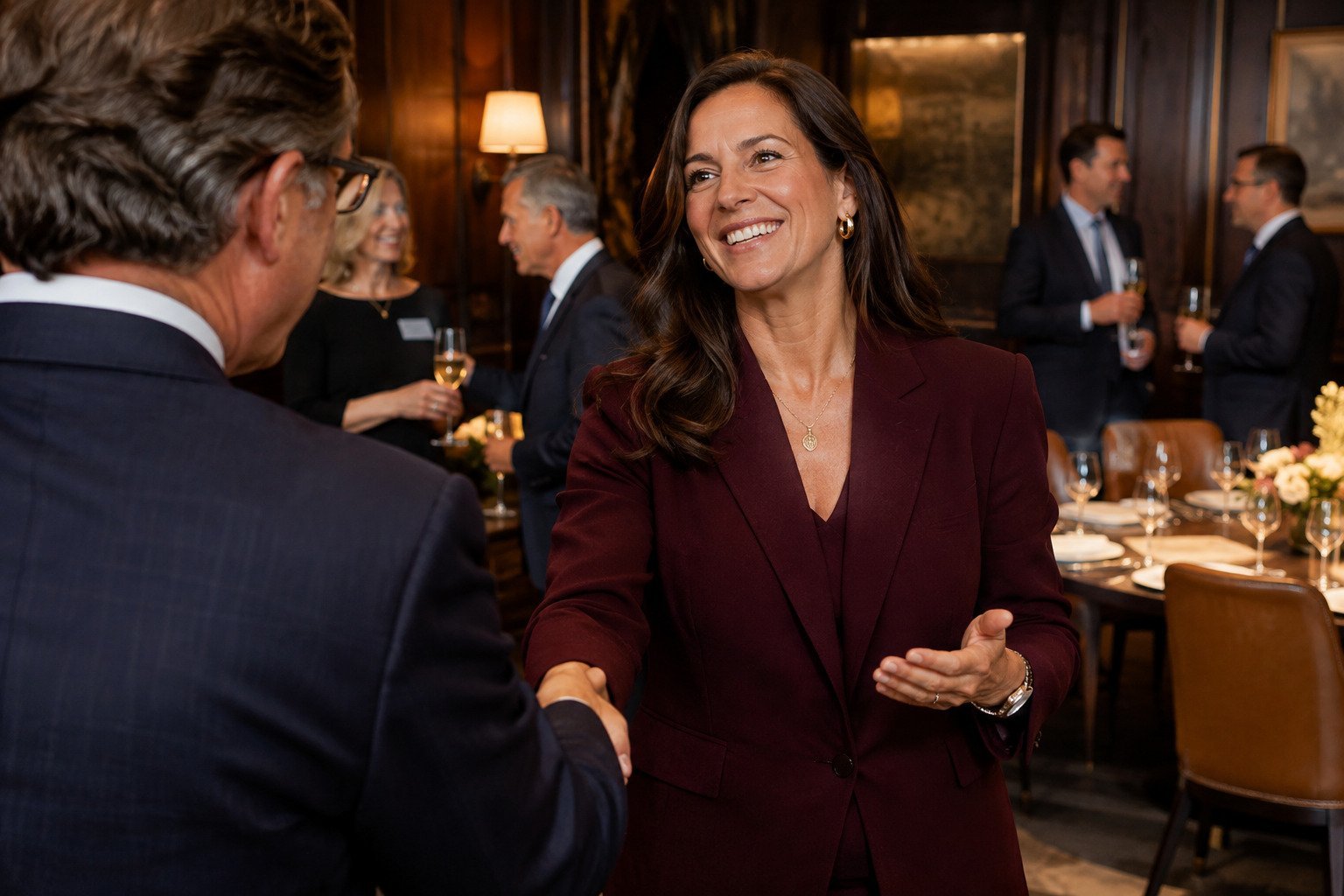
A beautiful private dining room. Champagne. A highly curated guest list. Three accomplished industry speakers. Senior executives around the table.
The sponsoring company had researched the attendees, invited us through LinkedIn and curated lists, secured the speakers, chosen the restaurant, and brought the right people together. Near the end of the evening, one of the hosts walked over while I was speaking with another executive.
“What do you do?”
We each gave our credentials, and he moved on. I kept thinking about the question. They already knew what we did and had invested in bringing us into the room. The opportunity was right there.
Instead of asking what we already knew, the host could have asked, “What did you think of the conversation?” “What brought you here?” or even, “How do you two know each other?” That simple question can uncover years of relationships, shared boards, investments, partnerships, or industries. That is the kind of intelligence that can turn a curated room into a meaningful conversation.
Getting the right people into the room is the beginning. What happens once they arrive determines the value of bringing them together.
We Spend So Much Getting People Into The Room
Executive engagement has become increasingly sophisticated, with companies investing in data, research, executive networks, venues, speakers, and highly curated invitation lists to bring the right people into the room.
But once guests arrive, that effort can disappear. A table of name tags, no welcome, and hosts busy with their own conversations can make a carefully curated event feel surprisingly impersonal. The first few minutes matter. Welcome guests by name, offer them a drink, make introductions, and explain why you thought certain people should meet. A curated room should feel curated after people walk through the door.
Use The Intelligence You Already Have
There is an irony in many executive events. Companies spend heavily on intent data, account intelligence, LinkedIn research, CRM enrichment, and curated invitation lists to identify exactly who should be there. Then, once those people arrive, that intelligence often disappears from the experience.
That makes “What do you do?” especially interesting. You knew enough about this person to decide they belonged at your table. Why start the relationship by asking for information you already paid to acquire?
Instead, use what you already know to start a better conversation: “I saw you’ve worked across healthcare and technology. What did you think of tonight’s discussion?” or “You and Susan both have board experience. Have you two met?”
The goal isn’t to show that you researched someone, but to use that knowledge to create curiosity. Information should lead to better questions.
The Hosts Set The Temperature Of The Room
Think about a great wedding. The couple moves around the room, stops at tables, says hello, introduces people, and thanks guests for coming. People want some connection to the people who brought them together.
Executive events deserve the same attention. If your company invited the room, your executives should work the room. That does not mean selling. Ask questions, make introductions, learn something, connect two guests who should know each other, sit at different tables, and find the person standing alone. Hospitality is part of executive engagement.
When the Slides Stop Working
I have watched presentations stall because slides will not advance, the screen will not connect, or someone cannot find the right cable. Technology fails. Everyone understands that. The interesting part is what happens next.
Can the executive continue the conversation? Can they explain the idea without the slide? Can they tell the story without reading bullet points? Can they engage the room while someone else solves the problem?
If the presentation collapses when the slides disappear, the slides were carrying too much of the conversation. At an executive level, command of the idea builds confidence.
And About That Demo...
Does an executive dinner need a demo? Sometimes. If the product unlocks an important insight or makes an abstract idea tangible, a short demonstration can add real value. In other situations, it changes the nature of the evening.
Executives came expecting a peer conversation and suddenly find themselves inside a sales presentation. Every minute spent demonstrating a product is a minute taken from discussion among the people you worked so hard to assemble.
Before adding a demo, ask one question: Does this deepen the executive conversation, or interrupt it?
Three Speakers. Then The Company Presentation.
Content has value. So does restraint. I recently attended a dinner with three strong industry speakers, followed by additional remarks from the sponsoring company. Each person had something worthwhile to contribute. Collectively, however, it left less time for the reason a highly curated executive dinner can be so valuable: conversation.
If you assembled 20 accomplished people around a table, the expertise is already in the room. Give people something worth discussing, then give them time to discuss it.
Put Down The Script
I have watched executives deliver company messages while reading from their phones or pages. It raises a simple question: Do I believe you?
Messaging and preparation matter, but not at the expense of human connection. Tell me why you care, what surprised you, what customers are asking, and what your company is trying to change. A perfectly crafted sentence matters less than credibility. People can read the website later. They came to hear you.
What Do They Say When You’re Not There?
This may be one of the biggest missed opportunities in executive engagement. Events often focus on the buyer, but an executive dinner brings together a much broader network of investors, advisors, entrepreneurs, board directors, and industry leaders who carry influence far beyond the room.
Those connections may not appear in an event dashboard, but a referral carries something advertising cannot manufacture: someone else's trust. When I introduce a company to someone in my network, I put my own reputation behind it.
What will people say about your company when you are not in the room? They may forget the slides or demo, but they will remember whether your leaders listened, connected people, and created an authentic experience.
The ROI That Travels
Companies understandably want to measure executive events through attendance, target accounts, meetings, opportunities, pipeline, and revenue. Keep measuring them. Then consider what those metrics miss.
Did someone make a valuable connection? Did an investor hear an idea worth carrying into another conversation? Did a board director discover a company they might recommend? Did two executives discover they were tackling the same challenge? Did someone understand your company differently? Did a guest become an advocate without ever becoming a buyer?
Those outcomes are difficult to attribute neatly to one dinner, but they can travel much further than the dinner itself.
Curation Gets Them In. Hospitality Connects.
The venue matters. The food matters. The speakers matter. The guest list certainly matters. Yet none of them can substitute for genuine engagement.
Know who you invited. Welcome them. Connect them. Ask better questions. Give them room to talk. Know your own story well enough to put down the script. And before the evening ends, go to every table.
The most valuable outcome from an executive dinner may happen months later, in another room, when your company is nowhere on the agenda. Someone asks for a recommendation, and one of your guests says:
“You should talk to them.”