
Africa has a talent problem. Not a shortage of it, quite the opposite. The continent has produced some of the greatest athletes in the history of human sport. Runners who have rewritten what the body is capable of. Footballers who command nine-figure transfer fees in European leagues. Boxers, cyclists, cricketers, and basketballers who compete and win at the highest levels in the world. And yet, for decades, almost all of the economic value generated by that talent has been captured somewhere else in broadcast deals negotiated in London, sponsorship contracts signed in New York, and merchandise manufactured in Asia.
That era is ending. Not because Africa has suddenly discovered its sporting potential, but because the combination of a rapidly maturing sports economy, an accelerating technology ecosystem, and the most demographically powerful consumer base on earth is creating the conditions for something genuinely transformative. The question is no longer whether Africa's sports economy will grow. It is whether the continent's leaders in government, business, and sport will build the infrastructure to capture the value that growth creates.
The Size Of The Opportunity Nobody Is Talking About Enough
The numbers tell a story that global investors have been slow to internalise. Africa's sports industry currently contributes just 0.5% of the continent's GDP compared to approximately 2% of global GDP, yet growth forecasts project an 8% increase in that contribution over the next three to five years. The gap between current contribution and potential contribution is not a sign of weakness. It is a signal of extraordinary upside.
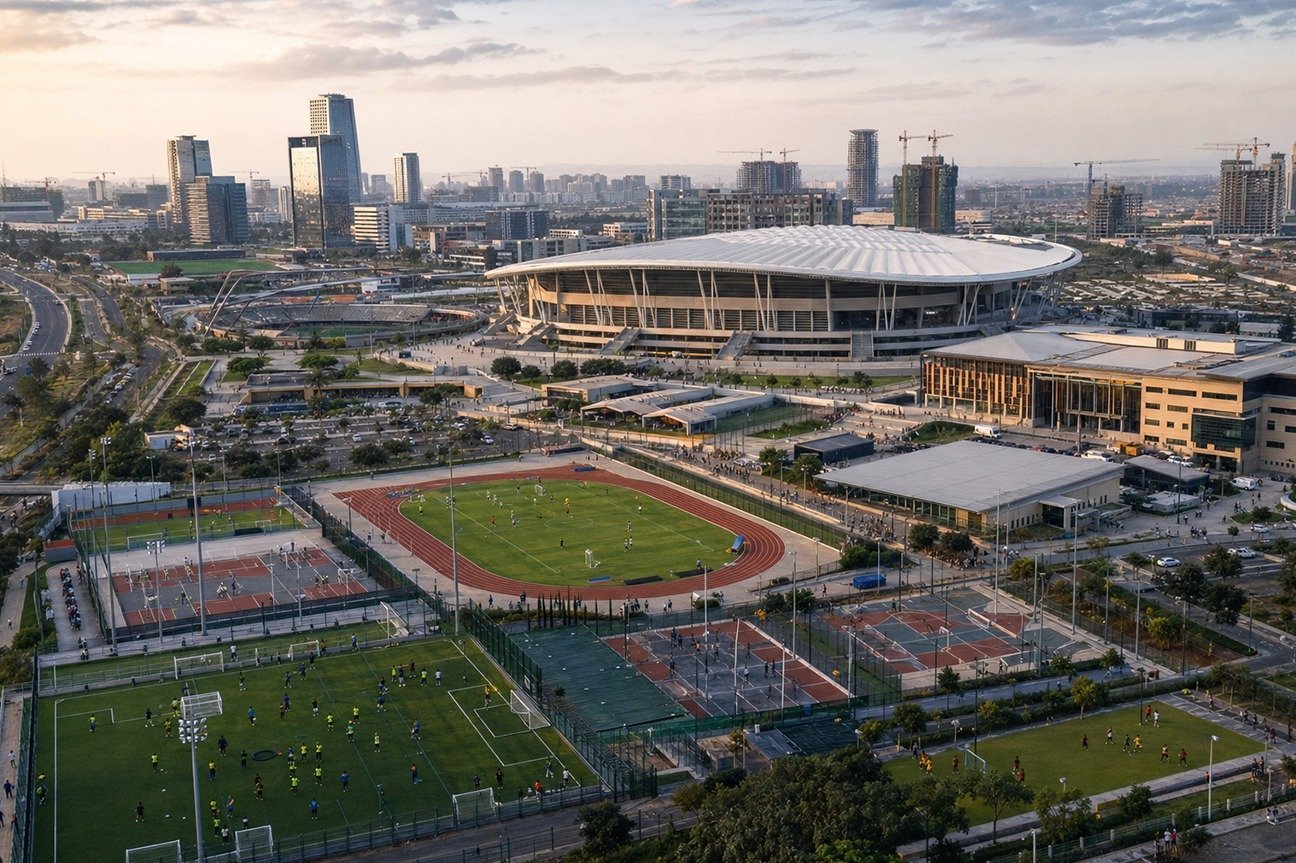
Africa now has a sports market valued at approximately $12 billion, with more than 109 stadiums boasting capacities above 30,000 and landmark infrastructure investments, including the $257 million Abidjan Alassane Ouattara Stadium, the $270 million Dakar Arena, and Rwanda's $165 million Amahoro upgrade signalling that governments across the continent are beginning to treat sport as a serious economic growth lever rather than a cultural amenity. Corporate investment, once concentrated almost exclusively in football, is now spreading into basketball, athletics, motorsport, and women's football. In 2010, fewer than 15% of African leagues had title sponsors. Today, that figure exceeds 70%, according to PwC's 2025 Africa Sports Outlook.
The sports analytics dimension adds another layer of opportunity. The global sports analytics market was valued at $4.79 billion in 2024 and is projected to grow from $5.79 billion in 2025 to $24.03 billion by 2032, at a compound annual growth rate of 22.5%. Africa is beginning to adopt these tools for performance management and commercial planning, and for a continent with one of the youngest, most digitally-native populations in the world, the intersection of sports data and digital engagement represents a particularly powerful commercial frontier.
Technology As The Multiplier
The opportunity in African sport cannot be fully understood without understanding the technology transformation happening simultaneously, because the two are not separate stories. They are the same story.
Africa's mobile and digital infrastructure is not a developing-market limitation. It is a leapfrog advantage. Hundreds of millions of Africans accessed the internet, financial services, and entertainment for the first time on a smartphone, bypassing the legacy infrastructure constraints that slow digital transformation in more "developed" markets. M-Pesa, Kenya's mobile money platform, was processing over 61 million transactions daily and serving more than 50 million active users in Kenya alone by 2024. The payments infrastructure that enables sports monetisation, ticketing, merchandise, streaming subscriptions, and sports betting is being built at scale and at speed across the continent.
The convergence of sports and digital entertainment is creating a significant growth opportunity across Africa. Rising fan engagement, expanding digital access, and the rapid growth of gaming and online content consumption are accelerating market development, positioning sports and digital platforms as increasingly important drivers of future investment and audience growth.
The Major Events Pipeline: A Once-In-A-Generation Infrastructure Catalyst
Africa is entering a significant era of global sporting events that could accelerate investment in infrastructure, tourism, technology, and urban development. Key milestones include Senegal hosting the 2026 Summer Youth Olympics, Egypt hosting the 2027 African Games, and Morocco co-hosting the 2030 FIFA World Cup alongside Spain and Portugal, while also pursuing a bid for the 2036 Olympic and Paralympic Games.
These events present an opportunity to modernize transportation networks, expand hospitality capacity, strengthen digital infrastructure, and create new employment opportunities. They can also elevate the global visibility of African cities and attract long-term private investment across multiple sectors.
However, lasting impact depends on more than hosting successful tournaments. The greatest economic and social returns will come from connecting infrastructure investments to sustainable sports ecosystems, professional leagues, media rights, grassroots development programs, and community engagement. When supported by strong governance and long-term planning, these events can become catalysts for enduring growth rather than short-term spectacles.
The Youth Demographic: The Most Powerful Commercial Variable In Global Sport
No analysis of Africa's sports economy is complete without recognizing its most important asset: its people. The continent is home to a young, dynamic, and increasingly connected population with a deep passion for sports, creating new opportunities for innovation, fan engagement, and industry growth.
This generation is not simply consuming sports content; it is actively shaping the future of the industry through content creation, digital communities, entrepreneurship, and new forms of engagement. For investors, leagues, and brands, the greatest opportunity lies in building the infrastructure, platforms, and ecosystems that can transform this demographic potential into long-term commercial value.
What Strategic Leadership Must Deliver
The opportunity is real, but momentum alone is not enough. Several structural gaps must be addressed if Africa is to capture the full value of its growing sports economy.
First, governance and transparency. Stronger accountability, transparent revenue-sharing, and local reinvestment are essential to ensure investment creates lasting economic value rather than short-term visibility.
Second, athlete development. Building stronger domestic leagues, coaching systems, and sports ecosystems can help retain more talent and economic value within the continent.
Third, technology-led fan monetization. Streaming, digital ticketing, mobile payments, and data-driven engagement are becoming the primary channels for connecting with and growing sports audiences.
Africa is not waiting to join the future of global sports commerce; it is helping build it. The leaders who invest strategically today will help shape the next generation of sport, technology, and economic growth.