
There is a moment in almost every sport, the instant before the first serve, the whistle before kickoff, the stillness before a race, where everything else disappears. Political division, economic anxiety, national identity, historical grievance: all of it recedes. For a few hours, the only thing that matters is the game. That moment is not trivial. It is, in fact, the most underutilized resource in global public health, peacebuilding, and community development that we have.
Sport has always been more than competition. But the evidence for its role as a genuine platform for wellness, social cohesion, women's empowerment, and international diplomacy has never been stronger or more urgently needed. What remains is the will to invest in it with the same seriousness we bring to other levers of social change.
The Smallest Court, The Biggest Movement
If you want a single case study in what democratic sport looks like, a sport that genuinely includes rather than excludes, that ages gracefully and crosses borders effortlessly, look at a pickleball court.
According to the Sports & Fitness Industry Association, pickleball grew 311% in participation between 2021 and 2024, reaching an estimated 19.8 million players in the United States alone by the end of 2024, with that figure climbing to approximately 22.7 million by mid-2025. But the more remarkable story is what is happening globally. The International Federation of Pickleball now counts 78 member countries, double the number from just five years ago. The UK's national federation saw membership jump 73% in 2024. Australia boasts around 92,000 players. Research from the Global Pickleball Report estimates that China alone has approximately 60 million pickleball players, with 2025 data from UPA Asia suggesting that 812 million people across Asia have played at least once, roughly one in five people across the continent.
Pickleball’s rapid rise is not just a sports trend but a reflection of how powerful inclusive design in movement can be. Its small court, simple learning curve, and adaptable physical intensity make it accessible across ages and fitness levels, while its naturally social format encourages connection. With strong participation from women and growing engagement among younger adults, demonstrate how reducing barriers to entry can turn a sport into a community-building platform rather than just a competitive activity.
Movement Is Medicine, And The Evidence Is Overwhelming
Movement is one of the most powerful yet underused tools for mental wellbeing. Regular physical activity reduces stress, anxiety, and depression, often with effects comparable to or stronger than other common interventions.
The impact is not long-term or complex to access. Even a few weeks of consistent movement can lead to noticeable improvements in mood, focus, and emotional balance. It works because the body and mind are deeply connected; when the body moves, it directly influences brain chemistry, energy levels, and emotional regulation.
Despite this, a large part of the global population remains physically inactive, especially younger generations. This inactivity is closely linked with rising mental health challenges, showing that the issue is not just psychological, but also lifestyle-driven.
At its core, movement is not just about fitness. It is a foundational form of mental care that is accessible, scalable, and deeply effective, yet still significantly underused in how we approach wellbeing today.
Sport Diplomacy: The Oldest Soft Power In The World
Sport has long been a tool of diplomacy, from the ancient Olympic Truce to modern examples like Ping-Pong Diplomacy, where athletic exchange helped ease geopolitical tensions and open communication between nations.
This role is not symbolic. Today, global institutions actively use sport in development and peacebuilding efforts, integrating it into programs focused on inclusion, education, gender equality, and community rebuilding. It is also used in targeted interventions aimed at reducing violence and strengthening social cohesion, especially among youth in vulnerable or conflict-affected regions.
At its core, sport works as soft power because it creates shared identity, trust, and cooperation across divides where politics often fails.
Women, Sport, And The Leadership Pipeline Nobody Talks About Enough
The most underdiscussed dimension of sport as social infrastructure is what it does for women, not primarily as athletes, but as leaders, professionals, and agents of social change.
A 2023 Deloitte report found that 85% of women who played sports as children believed the skills developed on the field were crucial to their professional success. Among women in senior leadership roles, that figure rises to 91%, and among women earning over $100,000, to 93%. A separate data point is even more striking: 80% of female Fortune 500 CEOs played sports in their formative years. The correlation is not coincidental. Sport teaches risk tolerance, resilience under pressure, strategic thinking in real time, and the capacity to lead and follow within a team, precisely the competencies that distinguish effective executives from competent technicians.
Women are still underrepresented in sport leadership, and many girls drop out during adolescence due to social barriers and a lack of support.
This is critical because sport builds confidence, leadership, and life skills beyond the field.
At the same time, women’s sport is growing rapidly, proving strong global demand. What’s needed now is sustained investment and equal opportunity across every level.
Community Wellness Is Not A Programme. It Is Infrastructure.
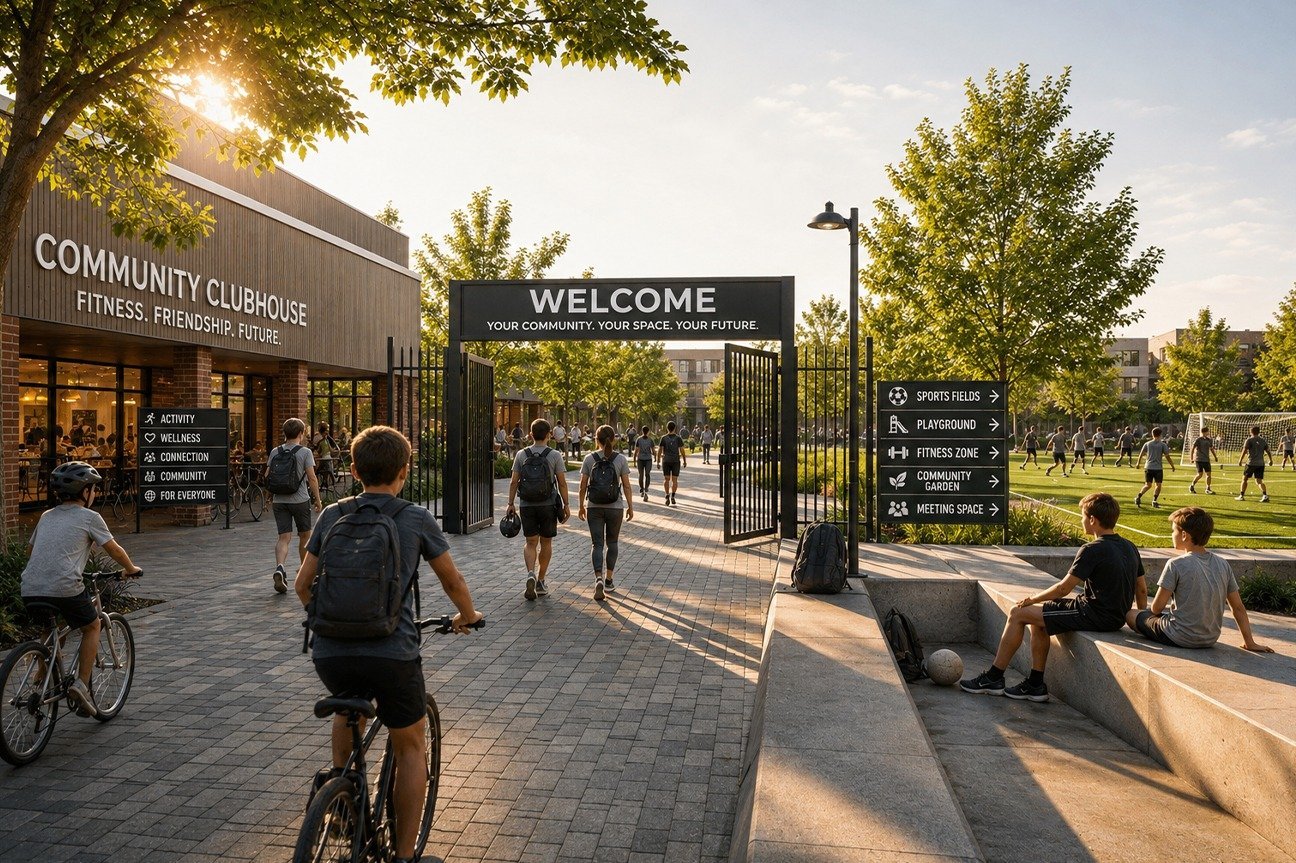
Community wellness should not be seen as a set of isolated programmes but as essential infrastructure for society.
Sport and movement-based initiatives are widely recognised as effective tools for building social cohesion, inclusion, and long-term development outcomes. At a broader level, they are increasingly being integrated into global development frameworks as enablers of stronger, healthier communities.
On the ground, their real impact is deeply local. Community sport spaces, parks, school games, and neighbourhood activities create consistent human connections across age, background, and identity. This regular interaction helps build trust, reduce isolation, and strengthen the social fabric.
In a time where loneliness and social disconnection are rising, these shared spaces are not optional extras. They function as critical infrastructure that supports mental wellbeing, resilience, and community strength.
The World Is Already Playing. The Question Is Whether We Are Watching.
The foundations for sport as a global platform for wellness, inclusion, and peace are already in place. Evidence shows clear benefits for mental health, strong historical precedent in diplomacy, growing economic potential in women’s sport, and proven impact at the community level.
What is still missing is a consistent institutional commitment to view sport not just as entertainment or an industry, but as a powerful and cost-effective tool for driving social wellbeing and cohesion..
Every year on 6 April, the United Nations marks the International Day of Sport for Development and Peace, a date chosen to mark the anniversary of the first modern Olympic Games. It is observed, cited in speeches, and largely underfunded. The gap between the day's stated ambitions and the real-world investment in sport-based community development is the same gap that exists between what we know about movement and mental health and what we actually build into our cities, schools, and health systems.
That gap is not a resource problem. It is a priority problem. And priority problems, unlike funding shortfalls, can be solved in a single decision.
The ball is on the court. The question is who will pick up the paddle.