
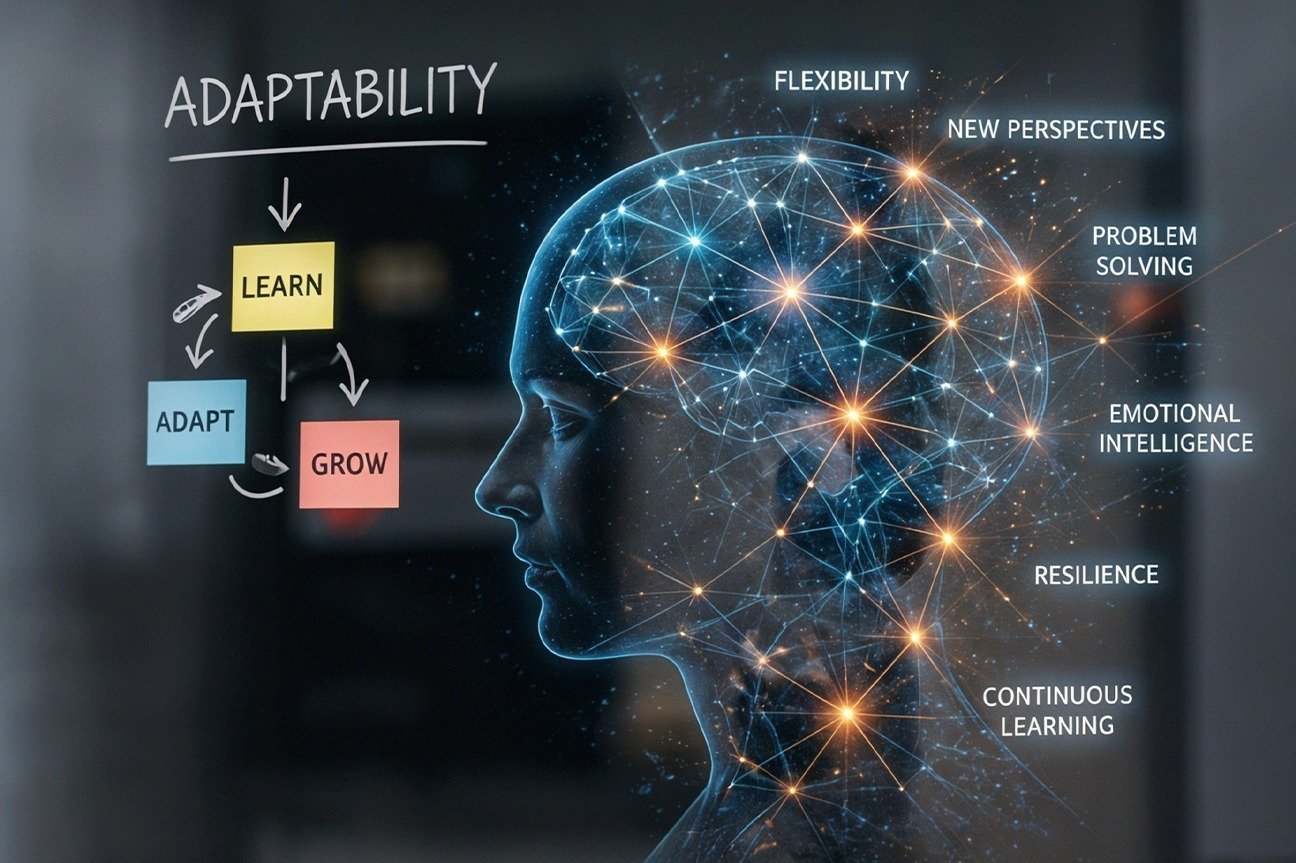
We have spent decades measuring performance in the wrong currency. Revenue targets. Medals. Rankings. Quarterly earnings. These are the outputs of the performance scoreboard after the game. But the real game, the one that determines whether a leader makes the right call under pressure, whether an athlete finds the zone at the critical moment, whether an entrepreneur sustains creative output through a grueling build, that game is played inside the brain. And until recently, we did not have the science to coach it with any rigour.
That is changing. Rapidly.
A convergence of neuroscience, cognitive psychology, energy management, and performance research is rewriting what we know about human potential. The executives, athletes, and global leaders who will define the next decade are not just technically skilled or strategically sharp. They are trained at the level of the nervous system. They understand what their brain is doing under stress, how to access optimal states on demand, and how to recover with the same intentionality they bring to performing. This is not self-help philosophy dressed in scientific language. It is an emerging discipline, and its implications for how we develop talent, build teams, and lead organisations are profound.
The Productivity Crisis Nobody Wants To Name
Before we can talk about peak performance, we have to be honest about the baseline. And the baseline is alarming.
According to Gallup's 2024 State of the Global Workplace report, 62% of employees worldwide are disengaged, producing a global productivity loss of $8.8 trillion annually. A 2025 comprehensive analysis drawing on McKinsey, Deloitte, and Gallup data found that 82% of employees are currently at risk of burnout, with burnout costing businesses $322 billion annually in lost productivity alone, not counting turnover, recruitment costs, or the quality degradation that precedes departure. Deloitte's 2025 Workforce Intelligence Report found that for the first time, mental fatigue, cognitive strain, and decision friction have surpassed workload volume as the leading indicators of burnout.
This is not a workload problem. It is a brain management problem. And it will not be solved by adding more wellness perks to a benefits package.
What The Brain Actually Does Under Pressure
Under pressure, the brain’s emotional system (amygdala) can override the prefrontal cortex, which is responsible for decision-making, reasoning, and self-control. This shift reduces clarity and can lead to impulsive or blocked thinking, even in highly capable individuals.
When stress is high, the brain prioritises survival responses over rational analysis, which is why judgment often breaks down in critical moments. This is not a weakness, but a natural neurological response.
Research also shows that emotional regulation is a trainable skill that directly influences leadership performance. The ability to reframe pressure instead of suppressing it helps restore cognitive control, improve decision quality, and enhance performance under uncertainty.
Flow: The State Where Ordinary People Do Extraordinary Things
Flow is a mental state of deep focus where a person becomes fully immersed in an activity, performing with clarity, ease, and high effectiveness.
In this state, distractions fade, overthinking reduces, and awareness becomes completely anchored to the task. Actions feel smooth, almost automatic, as if the mind and body are working in sync without friction. Time perception often shifts, making minutes feel shorter or longer than they actually are.
Flow typically occurs when the challenge of a task is balanced with a person’s skill level, not too easy to cause boredom and not too difficult to create anxiety. Clear goals and immediate feedback also help the mind stay locked into the activity.
It is a state where preparation, focus, and execution align, allowing a person to access their full capability without mental resistance interfering.
The Energy Equation: Sleep, Recovery, And The Cognitive Premium
Peak performance cannot come from a depleted system. When the brain is not properly rested, its ability to think clearly, focus, and adapt begins to decline in ways that directly affect decision-making and behaviour.
Lack of sleep weakens the brain functions responsible for attention, emotional regulation, creativity, and flexible thinking. This leads to slower reactions, poorer judgment, and a reduced ability to adjust to new or changing situations.
In practical terms, this means reduced sleep does not increase productivity; it reduces the quality of output across every task. Whether in leadership, sport, or entrepreneurship, exhaustion does not enhance performance. It gradually undermines the very systems required for high-level thinking and execution.
Neuroleadership: The Emerging Science Of Leading At The Brain Level
The integration of neuroscience into leadership development is moving from concept to practice. As organisations face faster change and greater complexity, there is a growing shift toward understanding leadership not just as behaviour, but as brain function in action.
Traditional leadership models often focus on skills and traits, but they do not fully account for how the brain processes stress, makes decisions, or adapts under uncertainty. This is where neuroscience-based approaches add value, by linking leadership effectiveness directly to cognitive functions like attention, emotional regulation, and adaptability.
Early applications of this approach show measurable improvements in areas such as decision-making speed, collaboration, and resilience during change. It highlights that key leadership abilities like flexibility in thinking and emotional control are not fixed traits, but trainable mental capacities shaped by how the brain is developed and supported over time.
The Quantum Shift: From Managing Performance To Engineering It
The old model of high performance was essentially extractive. Push harder. Sleep less. Sacrifice more. Outwork the competition. It produced results in the short term, for a small fraction of people with exceptional natural resilience, in circumstances that did not demand sustained excellence over decades.
The new model is engineering. It begins with the brain understanding its operating systems, optimising its inputs, training its regulatory capacity, and designing environments and practices that trigger optimal states on demand. It treats recovery as a performance variable, not a concession. It measures not just outputs but the neurological conditions that make elite output sustainable.
This is the Quantum Human Performance™ framework: not a motivational philosophy, but a systems approach to human optimisation grounded in the best available neuroscience. It recognises that the prefrontal cortex is trainable, that flow is triggerable, that emotional mastery is a learnable skill, and that the gap between good performance and exceptional performance is increasingly found not in talent, strategy, or effort but in the quality of the brain state from which those things are expressed.
The executives, athletes, educators, and global leaders who understand this will not merely perform better. They will perform differently from a level of coherence, clarity, and resilience that those still running on the old model will struggle to recognise, let alone match.
Train the Brain. Master the Game. Live Quantum.