
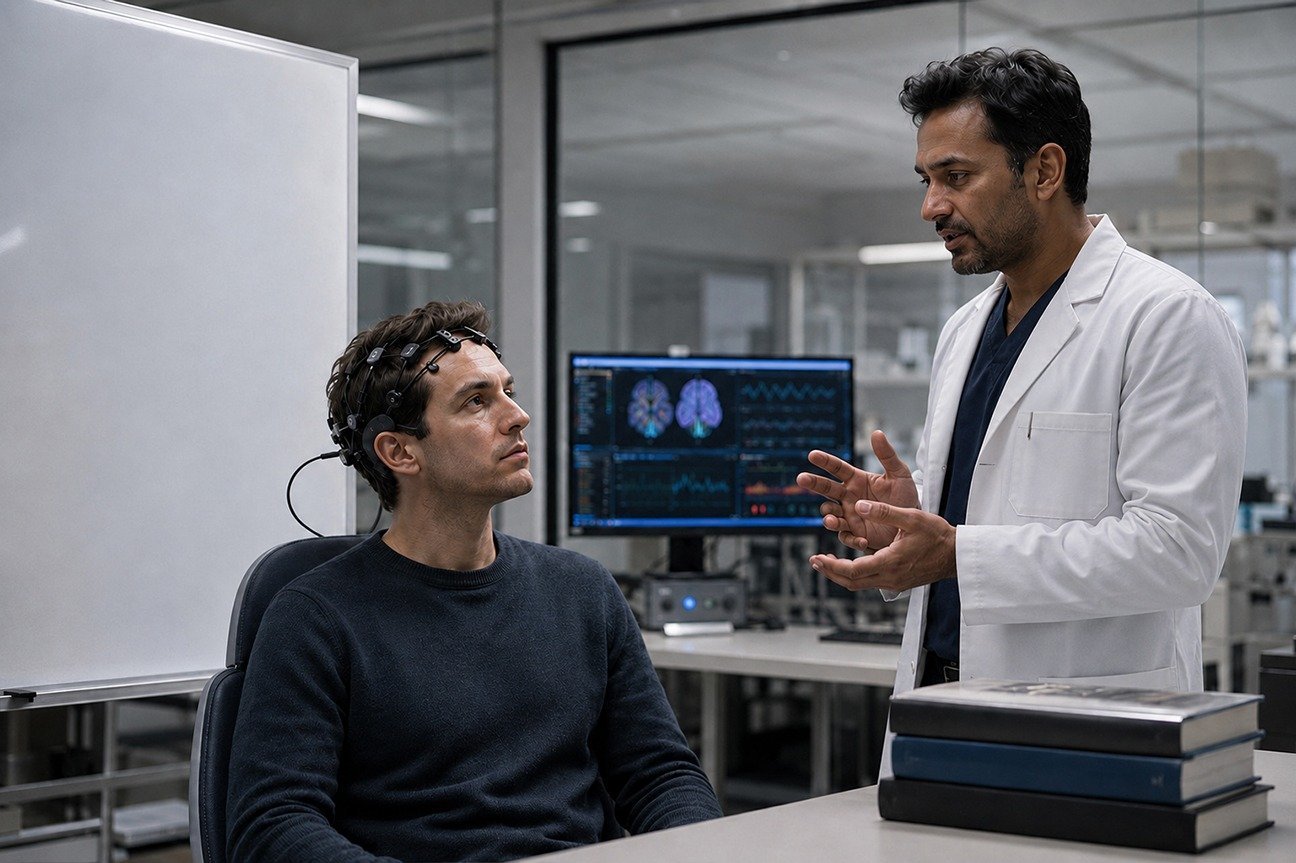
In the modern era of rapid technological advancement, few questions are as profound as the one now emerging at the intersection of neuroscience and artificial intelligence: who owns the human brain? As innovations begin to decode, influence, and potentially enhance neural activity, the boundaries between biology, technology, and personal identity are becoming increasingly blurred.
What was once the domain of science fiction is now entering clinical and commercial reality. Brain-computer interfaces, neuroimaging powered by artificial intelligence, and cognitive enhancement technologies are redefining what it means to think, decide, and even be human.
In this evolving landscape, neuroethics is no longer a theoretical discipline. It is a necessary framework for navigating the future of human autonomy, privacy, and identity.
The Rise Of Neurotechnology
Advances in neuroscience and engineering have enabled technologies that can directly interact with the human brain. Brain-computer interfaces are now capable of translating neural signals into digital commands, allowing individuals with paralysis to control external devices using thought alone.
Research published in Nature demonstrates that neural interface systems can decode brain activity and convert it into functional outputs, enabling communication and movement restoration in individuals with severe neurological impairments.
At the same time, artificial intelligence is enhancing the ability to interpret complex neural data. Machine learning models can analyze brain imaging data to identify patterns associated with neurological disorders, cognitive states, and behavioral responses.
These developments signal a fundamental shift. The brain is no longer entirely inaccessible. It is becoming measurable, interpretable, and increasingly interactive.
Data, Ownership, And The Question Of Cognitive Privacy
As neurotechnology advances, it generates a new category of highly sensitive data: neural data.
Unlike traditional health data, neural data has the potential to reveal thoughts, intentions, emotions, and cognitive patterns. This raises a critical ethical question: who owns this data?
Global policy discussions have begun to address this issue. The Organisation for Economic Co-operation and Development has emphasized that emerging neurotechnologies require governance frameworks to ensure that personal brain data is protected and used responsibly in digital and healthcare systems.
The concept of “cognitive liberty” is now gaining attention in ethical and legal discussions. It refers to an individual’s right to control their own mental processes and to be free from unauthorized access or manipulation of their thoughts.
In a world where neural signals can be recorded and analyzed, protecting this fundamental right becomes essential.
The Ethics Of Augmentation And Enhancement
Beyond medical applications, neurotechnology is opening the door to cognitive enhancement.
Emerging tools may allow individuals to improve memory, attention, or decision-making through direct interaction with the brain. While these innovations hold promise, they also raise difficult ethical questions.
Research indicates that neurotechnologies are extending beyond therapeutic applications toward cognitive enhancement, raising ethical concerns related to identity, autonomy, fairness, and unequal access, with the potential to create new forms of social and technological inequality.
If cognitive enhancement becomes widely available, it could create new forms of inequality between those who have access to such technologies and those who do not.
There is also the question of authenticity. If technology can influence thought processes or decision-making, to what extent are those decisions truly human?
These concerns highlight the need for clear ethical boundaries as neurotechnology continues to evolve.
Responsibility, Regulation, And Global Governance
The rapid pace of innovation in neuroscience and artificial intelligence has outpaced the development of regulatory frameworks.
Unlike traditional medical technologies, neurotechnologies interact directly with the brain, making their ethical implications far more complex.
The World Health Organization has emphasized the importance of establishing governance frameworks for emerging neurotechnologies to ensure they are developed and used in ways that protect human rights and dignity.
Policy discussions increasingly focus on the need for transparency, accountability, and informed consent in the use of neurotechnology. Ensuring that individuals understand how their brain data is collected, stored, and used is essential.
There is also a growing recognition that global collaboration will be necessary. Neurotechnology is not confined by borders, and inconsistent regulations across countries could create ethical and legal gaps.
Redefining Identity In The Age Of Brain Technology
Perhaps the most profound implication of neurotechnology lies in its impact on human identity.
The brain is not just an organ. It is the foundation of consciousness, memory, personality, and self-awareness.
Technologies that can influence or interpret brain activity, therefore, challenge traditional notions of individuality and agency.
Philosophical and ethical analyses increasingly suggest that as neurotechnology advances, society must reconsider concepts such as free will, responsibility, and the nature of the self.
The question is no longer whether technology can interact with the brain. It is how far that interaction should go.
Conclusion: Who Owns The Brain?
The rise of neurotechnology and artificial intelligence is forcing society to confront a fundamental question: who owns the human brain?
Is it the individual, whose thoughts and identity are rooted in neural activity? Is it the institutions that develop technologies capable of interpreting and influencing that activity? Or is it a shared responsibility shaped by ethical, legal, and societal frameworks?
The answer will define the future of human autonomy.
As innovation accelerates, the need for robust neuroethical frameworks becomes increasingly urgent. Protecting cognitive privacy, ensuring equitable access, and preserving human dignity must remain central to this conversation.
In the age of innovation, ownership of the brain is not just a legal question.
It is a question of what it means to be human.