
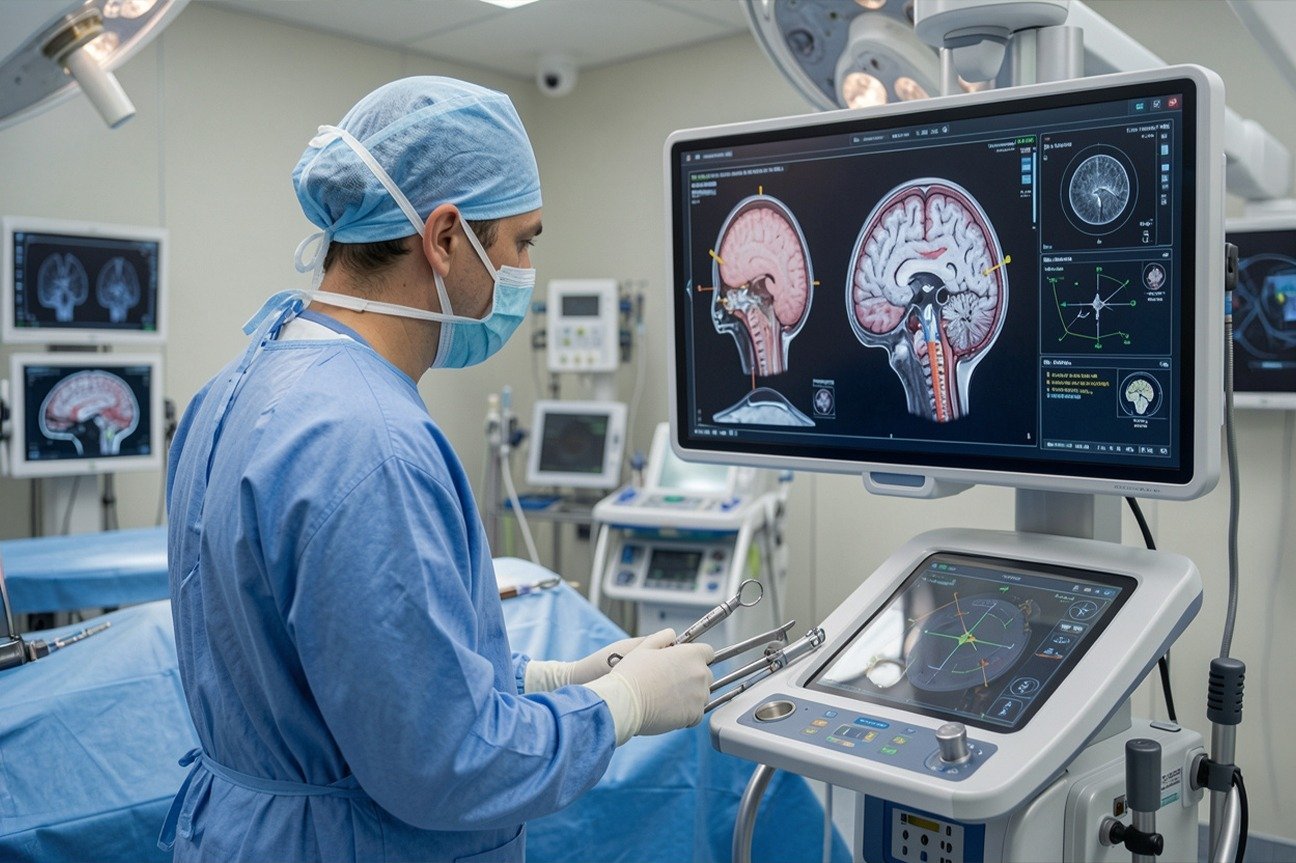
In the evolution of modern medicine, few fields stand at the intersection of technology and human vulnerability as clearly as neurosurgery. Operating on the human brain requires extraordinary precision, judgment, and the ability to interpret vast amounts of clinical data. Artificial intelligence is now entering this domain with unprecedented potential.
AI-powered imaging analysis, predictive algorithms, and intraoperative guidance systems are beginning to reshape how neurosurgeons diagnose, plan, and perform complex procedures. These technologies promise greater precision, improved patient outcomes, and new frontiers in brain research.
When machines begin to assist in decisions that directly affect the human brain, the conversation extends beyond technical capability. It enters the territory of autonomy, accountability, and the ethics of augmenting human cognition itself.
In this emerging landscape, artificial intelligence is not merely a surgical tool. It is a transformative force redefining the relationship between technology and the human mind.
The Rise of Intelligent Neurosurgery
Neurosurgery generates enormous volumes of clinical data, including imaging scans, neurological monitoring signals, and surgical navigation information. Artificial intelligence systems are particularly well-suited to interpret these complex datasets.
A systematic review in Neurosurgical Review reports that AI models are being widely used across neuro-oncology, vascular neurosurgery, and functional neurosurgery to improve diagnostic accuracy and clinical decision-making.
In highly complex procedures such as brain tumor resections or epilepsy surgery, even small improvements in surgical precision can significantly influence neurological recovery and long-term patient outcomes.
As a result, artificial intelligence is increasingly viewed not as a replacement for neurosurgeons but as an augmentation of human expertise.
Precision Medicine and Predictive Neurosurgery
One of the most promising applications of artificial intelligence lies in predictive modeling.
Machine learning systems can analyze patient histories, imaging data, and surgical outcomes from thousands of previous cases to estimate risks, predict complications, and guide personalized treatment strategies.
Research discussed by Stanford Medicine explains that AI systems trained on large electronic health record datasets can identify patterns and predict patient outcomes, disease trajectories, and clinical risks using large-scale medical data.
These predictive tools enable neurosurgeons to design more personalized treatment strategies, thereby improving safety and long-term neurological outcomes.
Over time, these technologies may contribute to a shift from reactive surgical care toward proactive and data-driven neurological management.
The Ethical Dilemma of Algorithmic Decision Making
Despite these advances, the integration of artificial intelligence into neurosurgery raises complex ethical challenges.
Medical decisions involving the brain carry profound implications for identity, cognition, and quality of life. When AI systems contribute to these decisions, questions emerge about responsibility, transparency, and bias.
An analysis published in the New England Journal of Medicine highlights that algorithmic bias can arise when artificial intelligence systems are trained on historical healthcare data that reflect existing disparities in access to care, potentially leading to unequal treatment outcomes across different patient populations.
Another major challenge involves the interpretability of artificial intelligence systems. Research published in Nature Machine Intelligence explains that many advanced machine learning models operate as complex computational systems whose internal decision processes are difficult to interpret, raising concerns about accountability in clinical environments.
In high-risk surgical contexts such as neurosurgery, ensuring transparency and maintaining human oversight remain essential.
While artificial intelligence can support clinical judgment, surgeons must ultimately remain responsible for final decisions affecting patient care.
The Augmented Brain and the Future of Human Cognition
Beyond surgical planning and diagnostics, artificial intelligence is also accelerating advances in neurotechnology.
Brain-computer interfaces and AI-driven neural technologies are being explored as tools to restore movement in individuals with paralysis and to treat complex neurological disorders.
At the same time, global organizations are examining the ethical implications of technologies that interact directly with the human brain. International governance discussions on neurotechnology emphasize the need to protect mental privacy, personal autonomy, and human dignity as technologies capable of accessing and influencing neural activity continue to evolve.
As artificial intelligence becomes capable of interpreting neural signals and interacting with brain activity, the boundary between therapeutic intervention and cognitive enhancement becomes increasingly blurred.
The concept of the augmented brain, therefore, raises fundamental questions about identity, agency, and the limits of technological intervention in human cognition.
Responsibility in the Age of Intelligent Medicine
The integration of artificial intelligence into neurosurgery requires careful governance, ethical oversight, and interdisciplinary collaboration.
Clinicians, engineers, ethicists, and policymakers must work together to establish clear frameworks for transparency, patient consent, algorithm validation, and accountability.
Artificial intelligence should function as a decision support system rather than an autonomous authority in clinical care. Maintaining human oversight ensures that surgical judgment, patient values, and ethical reasoning remain central to medical practice.
As neurosurgical technologies continue to evolve, ethical safeguards must evolve alongside them.
Conclusion: Navigating the Future of the Augmented Brain
Artificial intelligence is rapidly transforming the landscape of neurosurgery. Its ability to analyze complex neurological data, guide surgical precision, and predict clinical outcomes offers remarkable opportunities to improve patient care.
Yet the brain is not merely another organ. It is the seat of consciousness, identity, and human experience.
Technologies that influence how the brain is treated or potentially enhanced must therefore be approached with exceptional care.
The future of neurosurgery will not be defined solely by algorithms or machines. It will be shaped by how responsibly humanity integrates these tools into the delicate architecture of the human mind.
The challenge ahead is not simply technological.
It is ethical.